
A machined part is rarely finished when it comes off the machine. The surface finish — what is done to the part after machining — decides how it looks, how it feels in the hand, how well it resists corrosion and wear, and sometimes how long it lasts in service.
The same aluminium bracket can leave the shop as a plain machined part with visible tool marks, as a smooth matte part after bead blasting, or as a hard black anodized part. The machining is the same. The finish is what changes.
This guide explains the finishes buyers ask for most often, which materials each one suits, what to watch out for, and how to specify a finish on your drawing so you get the part you expected. If you are still choosing between basic processes, start with What is CNC Machining?
What “Surface Finish” Means
Surface finish covers three things at once, and buyers usually care about all three:
Appearance. Colour, gloss and texture — matte or shiny, smooth or grainy, natural metal or coloured.
Roughness. How smooth the surface feels and measures. A part fresh from the mill shows fine tool marks; bead blasting or polishing removes or hides them.
Protection. Resistance to corrosion, wear and chemicals. Anodizing protects aluminium; plating protects steel; powder coating protects almost any metal.
A finish is a trade-off between these three. A mirror polish looks excellent but costs time and does nothing against corrosion. Anodizing protects well but only works on aluminium. Powder coating hides machining marks completely, but it adds a layer that changes the part’s size. The right choice depends on what the part has to do, not on which finish sounds best.
The Finishes Most Buyers Ask For
| Finish | Works on | Look | Best for |
|---|---|---|---|
| As machined | All metals and plastics | Visible tool marks, natural metal | Prototypes, internal parts, parts that will be finished later |
| Bead blasting | Aluminium, steel, other metals | Uniform matte, grainy texture | Hiding tool marks, a clean even look before anodizing or coating |
| Anodizing Type II | Aluminium | Coloured, satin finish | Consumer products, enclosures, parts that need corrosion resistance and colour |
| Anodizing Type III (hard) | Aluminium | Darker, harder surface | Parts that see wear, sliding or frequent handling |
| Powder coating | All metals | Thick, even colour coat, matte or gloss | Enclosures, brackets, outdoor parts, strong colour |
| Plating (nickel, zinc, chrome) | Steel, brass, aluminium | Bright metallic, or dark for black chrome | Corrosion protection, wear resistance, a decorative metal look |
| Polishing / brushing | Aluminium, stainless steel, brass | Mirror shine, or fine straight lines | Visible parts, medical and food equipment, premium products |
| Passivation / chromate conversion | Stainless steel / aluminium | Almost invisible, natural metal | Corrosion resistance where the look must not change |
As Machined and Bead Blasting
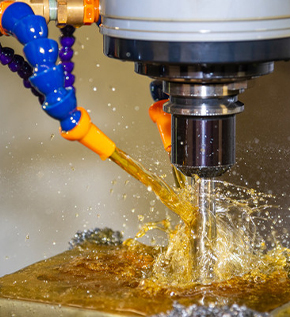
As machined is the default: the part is machined, deburred, and sharp edges are chamfered. It is the cheapest finish and the fastest, because nothing else is done to the part. Tool marks are visible, and the surface has no extra protection. For a prototype that only needs to prove the shape and fit, as machined is usually enough.
Bead blasting fires fine glass beads at the surface, leaving a uniform matte, slightly grainy texture. It hides tool marks and small surface defects and gives the part a clean, even look. It is often a step before another finish — bead blasted parts are commonly anodized afterwards — but it also works on its own. Bead blasting does not add a protective layer, so on its own it does little for corrosion resistance.
Anodizing (Aluminium Only)
Anodizing builds a hard oxide layer on aluminium by an electrochemical process. It is the most common finish for aluminium parts, and it is the one buyers ask for most.
Type II anodizing is the standard decorative kind. It adds colour — clear, black, silver, blue, red and more — and improves corrosion resistance. Parts are often bead blasted first, which gives the classic smooth matte anodized look, or brushed first, which gives a glossy coloured finish with fine lines.
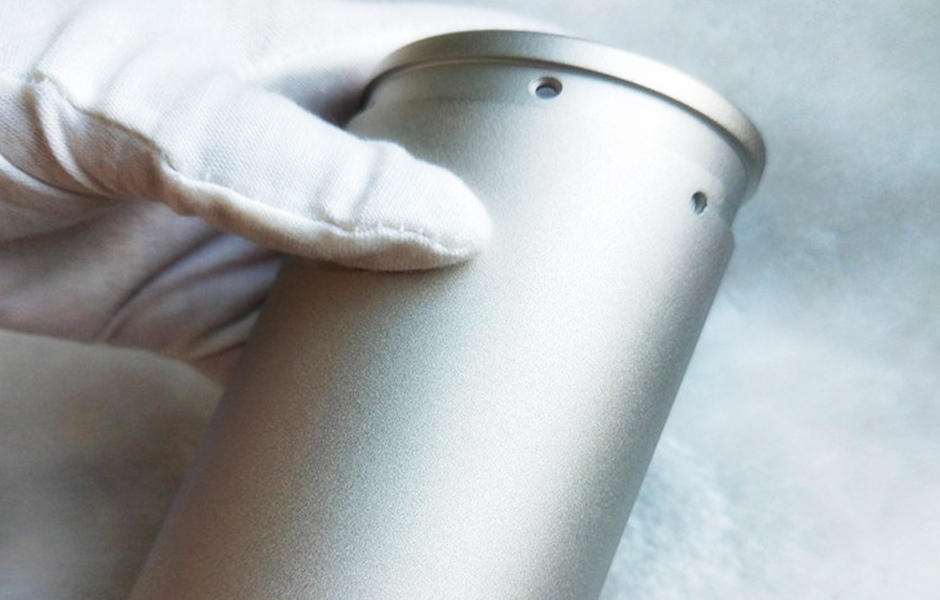
Type III, or hard anodizing, builds a thicker, harder layer. It is darker in colour and is chosen when the part must resist wear — sliding parts, parts that are handled often, or parts used outdoors.
Anodizing only works on aluminium. It cannot be applied to steel, brass or plastic. And because it builds a layer on the surface, it changes dimensions slightly: if a bore or a mating face has a tight tolerance, say so on the drawing, and the supplier can mask it or machine it after anodizing. For more on tolerances, see Precision, Accuracy and Tolerance
Powder Coating, Painting and Plating
Powder coating sprays a dry powder onto the metal, then bakes it into a tough, even coat. It works on all metals, gives strong colour in matte or gloss, and hides machining marks completely. It is a good choice for enclosures, brackets and outdoor parts. The coat is thick compared with other finishes, so threaded holes and close-fitting features must be masked or re-tapped after coating — tell the supplier which features are critical.
Plating deposits a thin metal layer on the part by electrochemistry. Zinc plating protects steel against rust; nickel plating adds wear resistance and a bright finish; black chrome plating gives a dark, distinguished look and improves wear resistance. Plating suits steel and brass best, and some processes work on aluminium too. As with other coatings, the layer adds thickness, so tight-tolerance features need to be agreed in advance.
Painting is the simplest coloured finish and works on metals and plastics, but it is thinner and less hard-wearing than powder coating, and it is usually chosen for large or low-volume parts where powder coating is not practical.
Polishing, Brushing and Passivation
Polishing works the surface down by hand or machine until it is smooth and mirror-like. It is the finish for parts people see and touch — consumer products, medical instruments, food equipment — but it is slow and expensive, and it should be reserved for the faces that are actually visible.
Brushing pulls a fine abrasive in one direction across the surface, leaving straight, even lines. Brushed stainless steel and brushed aluminium are common in premium products. Brushed parts are often anodized afterwards, which keeps the lined look and adds colour and protection.
Passivation is a chemical treatment for stainless steel that removes free iron from the surface and improves corrosion resistance, without changing how the part looks. Chromate conversion (Alodine) does a similar job for aluminium: it protects the surface while keeping the natural metal appearance, and it keeps the part electrically conductive, which matters for electronic enclosures.
How to Choose a Finish
Five questions decide it:
1. What material is the part? Anodizing is aluminium only. Plating suits steel and brass. Powder coating works on any metal. If the material is already fixed, it narrows the choice at once.
2. Where will the part live? Indoors and dry, almost any finish works. Outdoors, in a damp room, or near salt water, choose a real protective layer — anodizing, plating or powder coating — and say so in the enquiry.
3. Will it be seen or touched? A hidden bracket can stay as machined. A housing, a handle or a medical instrument needs a finish chosen for looks and feel.
4. Does it slide, rub or take wear? Hard anodizing, nickel plating and powder coating resist wear. A soft decorative finish on a sliding face will not last.
5. Are there tight tolerances or threads? Every coating adds a layer. Mask the critical bores, threads and mating faces on the drawing, or ask the supplier to machine them after finishing. A note such as “mask threads before coating” avoids most rework.
If you are unsure, send the drawing and describe the part’s job in one sentence — “outdoor aluminium enclosure, will be handled daily” is enough for a supplier to suggest a finish. The same advice applies to cost in general: see How Much Does CNC Machining Cost in China? A 2026 Pricing Guide — a finish is usually a small share of the part price, but a wrong choice can mean making the part twice.
Finishes and Tolerances: What to Put on the Drawing
A finish is part of the part’s specification, so it belongs on the drawing, not only in an email. Write three things:
- The finish name and type — for example, “Bead blast + anodize Type II, black”, not just “black”.
- Which faces it applies to — “all surfaces”, or “outside faces only, inside as machined”.
- What must be masked or kept clear — threads, bores, mating faces and datums.
If the drawing has a general note, keep it simple: “Finish per supplier standard unless noted.” And if the part is a prototype, say so — the supplier can suggest the cheapest finish that still shows the design properly. The full checklist for sending a drawing is in How to Source CNC Machined Parts from China: A Buyer’s Checklist
How to Get a Quote for Finished Parts
Send the supplier your 3D file and 2D drawing, the material, the finish, the quantity, and the delivery location and date. Name the finish exactly as above, and mark the faces that matter — for example, “outside faces bead blast + black anodize Type II; threads masked”.
If you are ready, you can request a quote from CNC Rapid for CNC machining services in China. Send your drawing and we will price your part based on your exact requirements, including the finish, and tell you if another finish would work better for the job.
FAQ
What is the cheapest surface finish? As machined. Nothing is added after machining, so there is no extra process and no extra cost. Bead blasting is usually the cheapest added finish.
Can any finish be applied to any material? No. Anodizing works only on aluminium. Passivation is for stainless steel. Powder coating works on most metals. Tell the supplier the material first, and the finish options narrow themselves.
Does a finish change the size of my part? Yes, slightly. Anodizing, plating and powder coating all add a layer. The change is small, but it matters on tight-tolerance features, threads and mating faces. Mask those features or machine them after finishing.
What finish should I choose for a prototype? As machined or bead blasted, in most cases. Both are fast and cheap, and both show the shape and fit honestly. Add a decorative finish only if the prototype will be shown to customers or investors.
How do I ask for a colour? Name the finish and the colour together — for example, “anodize Type II, black” or “powder coat, RAL 9005 black”. If the exact shade matters, send a sample or a RAL / Pantone code.