
Not every part needs 5-axis machining — but for the parts that do, no other process will do the job as well.
A 3-axis mill moves the cutting tool in three straight lines: left–right (X), front–back (Y) and up–down (Z). A 5-axis machine adds two rotary axes, so the tool — or the part — can also tilt and rotate. That extra movement is what lets it reach angled faces, deep pockets and curved surfaces in far fewer setups.
This guide explains what 5-axis machining is, the difference between 3+2 and simultaneous 5-axis, the parts that genuinely need it, the parts that do not, and how to decide before you ask for a quote. If you are still choosing between basic processes, start with What is CNC Machining?
What Is 5-Axis CNC Machining?
5-axis CNC machining is milling in which the cutting tool can move along three linear axes (X, Y, Z) and two rotary axes at the same time or in sequence. The two rotary axes are usually called A and B, or B and C, depending on the machine design.
In practice, the two extra axes do one simple thing: they change the angle of approach. Instead of unclamping the part, turning it over and setting it up again to reach the next face, the machine tilts the part or the spindle head and keeps cutting.
That matters for two reasons. First, every time a part is unclamped and re-clamped, a small positioning error can creep in. Fewer setups usually means features on different faces line up better with each other. Second, the tool can stay short and rigid, and at the right angle to the surface, instead of reaching into a deep pocket with a long, flexible tool.
3-Axis vs 3+2 vs Simultaneous 5-Axis
Many buyers think the choice is simply 3-axis or 5-axis. There is an important middle step, and knowing the difference can save a lot of money.
| Method | How it works | Best for |
|---|---|---|
| 3-axis | Tool moves in X, Y, Z only. The part is fixed. | Flat plates, brackets, housings, pockets and holes that can all be reached from one direction |
| 3+2 (indexed 5-axis) | The two rotary axes tilt the part to a fixed angle and lock it. Cutting then happens in 3 axes, as normal. | Parts with features on several faces, angled holes, or holes at compound angles |
| Simultaneous 5-axis | All five axes move together while cutting, so the tool angle changes continuously. | Impellers, turbine blades, complex curved surfaces, mould cavities with freeform shapes |
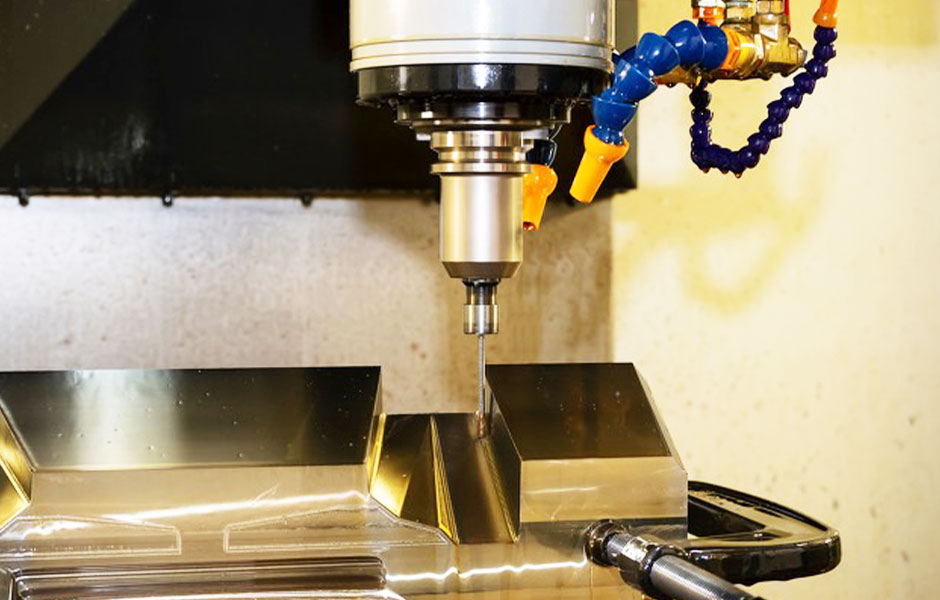
3+2 is the most useful mode for many parts, and often the cheapest 5-axis option. The part is positioned once, then machined face by face without being unclamped. Simultaneous 5-axis is needed only when the surface itself curves continuously — a turbine blade, for example — and the tool must stay at a constant angle to that surface throughout the cut.
If a supplier quotes “5-axis” without saying which mode, ask. 3+2 and simultaneous 5-axis use the same machine, but the programming, setup and price are very different.
When Do You Need 5-Axis Machining?
You probably need 5-axis — at least 3+2 — if your part has one or more of these features:
- Features on three or more faces. A housing with a bore on one face, a mounting face on another and a hole at an angle on a third is a classic 3+2 part. On a 3-axis machine it needs three setups; on a 5-axis machine it can often be done in one.
- Angled holes or faces. Holes that are not at 0° or 90° to the main faces, such as a drain hole at 30°, are difficult on a 3-axis machine and need special fixtures. A 5-axis machine simply tilts to the angle.
- Deep pockets with small corner radii. Tilting the tool lets the shop use a shorter, stiffer tool to reach the bottom of a deep pocket. A long tool on a 3-axis machine deflects more, vibrates, and leaves a worse finish.
- Complex curved or freeform surfaces. Impellers, turbine blades, blisks (bladed discs), pump impellers and compressor wheels have twisted, curved blades that a 3-axis tool cannot follow cleanly. These are simultaneous 5-axis parts.
- Tight relationships between features on different faces. When two bores on different faces must be concentric, or two mounting faces must be parallel within a tight tolerance, doing them in one setup — without re-clamping — removes the biggest source of error. Standard tolerances follow ISO 2768, with tighter tolerances available for precision features — send your drawing for a quote.
Typical Applications
- Aerospace: turbine blades, impellers, structural brackets, housings and engine components in aluminium and titanium
- Automotive: cylinder heads, intake manifolds, gearbox housings, turbocharger compressor wheels and prototype engine parts
- Medical: surgical instruments, orthopaedic implants and dental components with curved, anatomical shapes
- Energy: pump impellers, valve bodies, manifolds and turbine components
- Mould and die: injection mould cavities and forming dies with undercuts, draft angles and deep, curved surfaces
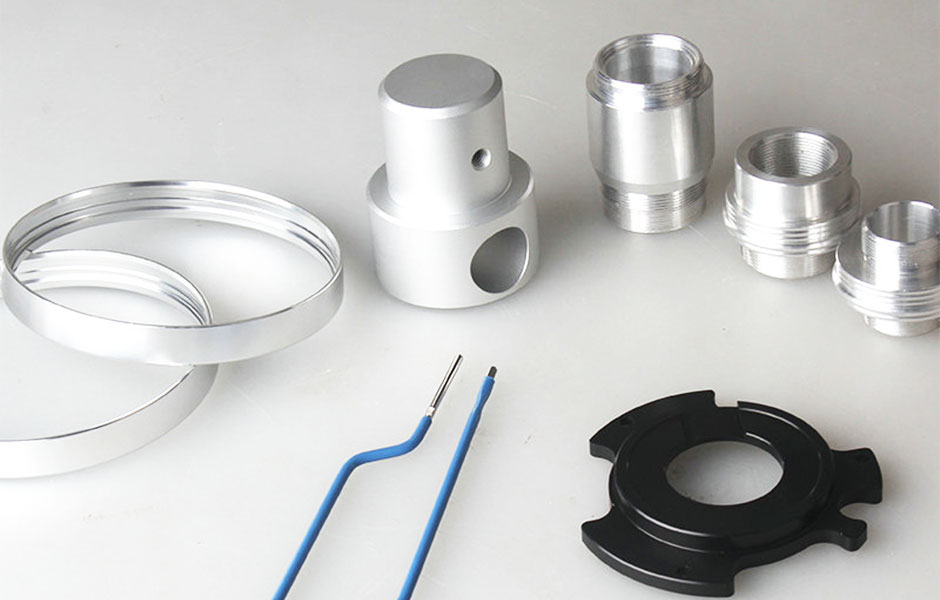
The common thread is geometry, not industry. A simple bracket for an aircraft is still a 3-axis part; a complex impeller for a pump is a 5-axis part, whatever industry it serves.
When 3-Axis Is Enough — and Cheaper
More axes do not automatically make a better part. For many parts, 3-axis is the right choice:
- Flat plates, simple brackets and housings with features on one or two faces
- Parts with pockets, slots and holes that can all be reached from one direction
- Prototypes where the shape is simple and speed matters more than setup count
- Any part that would need only one or two setups on a 3-axis machine
As a rule of thumb, if your part can be machined in two setups on a 3-axis machine without losing accuracy, 5-axis is probably not worth the higher hourly rate. If it would need three or more setups, ask for a 5-axis price as well — the higher rate can still mean a lower total price, because the total machining time falls. The same point applies to cost in general: see How Much Does CNC Machining Cost in China? A 2026 Pricing Guide — in that guide, 5-axis milling is listed at $50–$100 per hour in China in 2026, against $20–$60 for 3-axis milling, but the per-part price is what matters, not the hourly rate alone.
5-Axis Design Tips: How to Keep the Cost Down
Do not specify 5-axis on the drawing unless the geometry needs it. Write the tolerance and the feature, not the machine. Let the supplier choose the process — a good supplier will use 3-axis where it works, because it is cheaper for both of you.
Avoid unnecessary undercuts and very deep, narrow pockets. Even a 5-axis machine has limits. A pocket that is deeper than it is wide, with a tiny corner radius, needs a long, thin tool and a long cycle time.
Keep tight tolerances only where they matter. Apply them to mating surfaces, bearing fits and features that must line up across faces. Loosening a non-critical tolerance can save a large part of the machining time. For more on this, see Precision, Accuracy and Tolerance
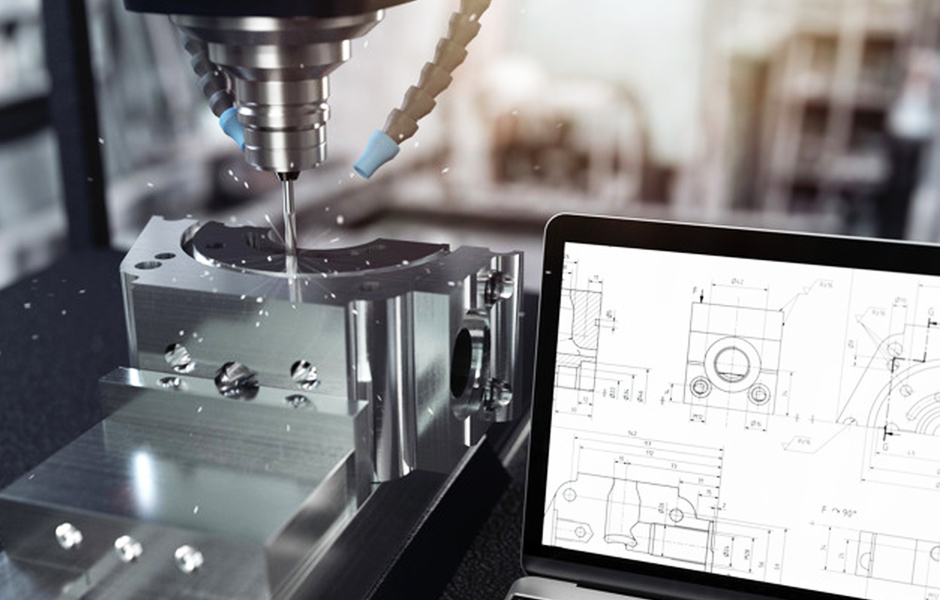
Send a complete file. A STEP or IGES file, a clear 2D drawing with material, finish, quantity and delivery date, will get you a faster and more accurate quote. The full checklist is in How to Source CNC Machined Parts from China: A Buyer’s Checklist
Ask the supplier three questions: Which mode will you use — 3-axis, 3+2 or simultaneous 5-axis? How many setups are planned? What is the price per finished part, delivered to the drawing? The answers will explain most price differences between suppliers.
How to Get a 5-Axis Quote
Send the supplier your 3D file, your 2D drawing, the material, the surface finish, the quantity, and the delivery location and date. Say which features are critical — for example, “these two bores must be concentric” — rather than naming a machine type.
If you are ready, you can request a quote from CNC Rapid for CNC machining services in China. Send your drawing and we will price your part based on your exact requirements, and tell you whether 3-axis, 3+2 or simultaneous 5-axis is the right process for it.
FAQ
Is 5-axis CNC machining more accurate than 3-axis?
Not automatically. 5-axis helps accuracy mainly by reducing setups: features machined in one setup, without re-clamping, line up better. The machine, the tooling, the fixture and the inspection plan matter just as much as the number of axes.
What is the difference between 3+2 and simultaneous 5-axis?
In 3+2, the rotary axes position the part at a fixed angle and lock, and cutting happens in 3 axes. In simultaneous 5-axis, all five axes move together during the cut. 3+2 suits multi-face and angled parts; simultaneous suits continuously curved surfaces such as impellers and turbine blades.
Do I need 5-axis for a prototype?
Only if the geometry needs it. Many prototypes are simple enough for 3-axis machining, which is faster to program and cheaper. If your prototype has curved surfaces, angled faces or features on several sides, 5-axis may be the right choice even for one piece.
What materials can be machined on a 5-axis machine?
The same materials as other CNC milling: aluminium (6061 and 7075), stainless steel, carbon steel, copper, brass and titanium, among others. The material choice depends on the application, not on the number of axes.