
There is no single price for CNC machining in China, because every part is different. As a rough guide for 2026, a simple aluminum prototype can cost $5–$50 per part in a small batch, a small precision aluminum part $20–$150, a stainless steel part $50–$200+, and a complex titanium part $300–$1,000+.
The exact price depends on your drawing. This guide explains what goes into a quote, the typical price ranges, and how to lower the cost without lowering quality. The numbers below are reference ranges for budget planning, not a fixed quotation. For an exact price, you need a quote based on your 3D file and drawing.
What Goes Into a CNC Machining Quote?
A professional quote is usually built from these parts:
- Material — the raw stock you pay for, including the material cut away as scrap.
- Machine time — the time the machine spends cutting your part.
- Setup and programming — programming, fixturing and first-article setup. This is a fixed cost for the job.
- Tooling — cutting tools and any custom fixture needed.
- Surface finish — bead blasting, anodizing, powder coating, polishing and similar processes.
- Inspection and quality control — measurement, CMM inspection if required, and documentation.
- Shipping and overhead — packing, export handling and delivery.
A useful formula is: Per-part cost ≈ Material + (Setup ÷ Quantity) + (Machining time × Hourly rate) + Finish + Inspection
That is why quantity matters so much: setup is divided by the number of parts.

Typical CNC Machining Hourly Rates in China in 2026
Hourly rates are only part of the story, and sources quote them in different ways. Some quote a machine-only rate. Others quote an all-in rate that already includes programming and inspection. That is one reason two suppliers can quote different hourly rates for the same part.
Indicative 2026 ranges for China, for typical aluminum and steel parts:
- 3-axis CNC milling: $20–$60 per hour
- CNC turning: $25–$55 per hour
- 5-axis CNC milling: $50–$100 per hour
5-axis costs more per hour, but it can finish a complex part in fewer setups. On a part with features on several faces, the higher rate can still mean a lower total price, because total machining time falls.
Do not compare hourly rates alone. Compare the price per finished part, delivered to your specification, and ask what is included in that price.
Typical Cost by Part Type
Simple aluminum prototype: $5–$50 per part. Basic holes, slots and flat surfaces.
Small precision aluminum part: $20–$150 per part. More setups, tighter tolerance, better finish.
Stainless steel or carbon steel part: $50–$200+ per part. Slower cutting, higher tool wear.
Complex titanium part: $300–$1,000+ per part. Difficult material, tight tolerance, long cycle time.
These are planning ranges. A small change in tolerance, material or finish can move a part from one range to another.
7 Factors That Move the Price Most
1. Material
Aluminum 6061 is usually the lowest-cost choice that still gives good strength for prototypes and housings. Aluminum 7075 is stronger, but it costs more and wears tools faster. Stainless steel, copper and especially titanium cost more to buy and take longer to machine. You also pay for the stock size, not only the finished weight.
2. Part complexity and setups
Simple parts with flat surfaces and a few holes are fast to machine. Deep pockets, thin walls, undercuts and curved surfaces take longer and may need more setups or a 5-axis machine. Each extra setup adds time and a new chance for error.
3. Tolerance
This is one of the most common reasons for a high quote. A standard tolerance such as ±0.05 mm is much cheaper to hold than a tight tolerance such as ±0.01 mm on every feature. Only apply tight tolerances where the part truly needs them — for example, on mating surfaces or bearing fits.
4. Quantity
For one piece, you pay all of the setup cost yourself. For 10 pieces, that cost is shared. For 50 or 100 pieces, the unit price usually falls further. That is why prototypes cost more per part than production runs, even when the part is identical.
5. Surface finish
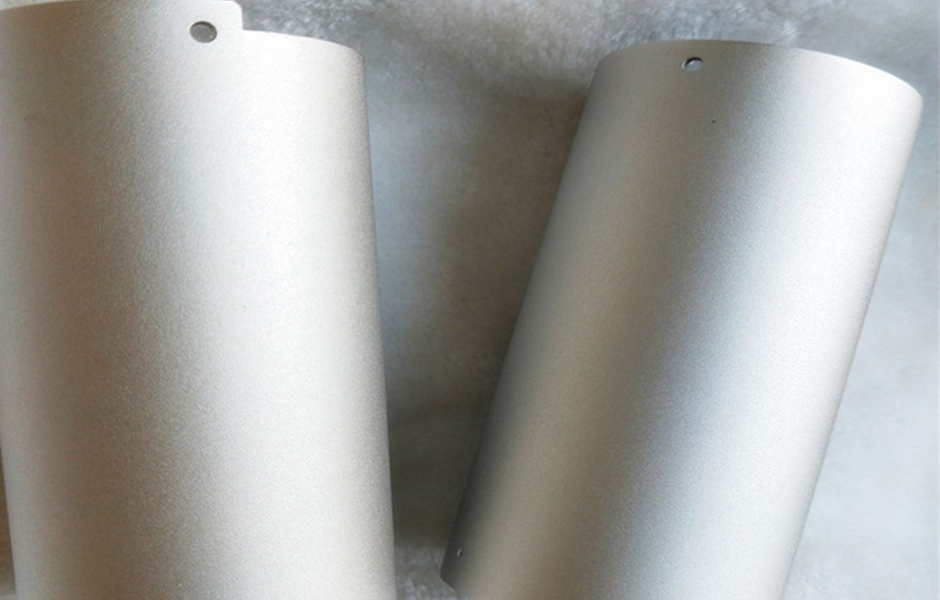
A basic machined finish is the lowest cost. Bead blasting, anodizing, powder coating and polishing add cost, often 10–30% depending on the process and batch size. Choose a finish for function first.
6. Inspection
Standard visual and dimensional checks are normally included. Full CMM inspection, material certificates or a detailed inspection report add time and cost, and are priced per batch.
7. Lead time
A normal lead time is the lowest cost. A rush order can cost more, because the shop must reserve machine time and sometimes run overtime. If your date is flexible by a few days, say so in your request.
Worked Example: A 6061 Aluminum Bracket
This is an illustrative example, not a quotation. Part: aluminum 6061 bracket, 6 machined features, ±0.05 mm tolerance, batch of 50 pieces. Material: about $6.40 per part. Machining time: 22 minutes per part at about $28 per hour = about $10.27 per part. Setup: $130 in total ÷ 50 pieces = $2.60 per part. Tolerance premium: about $1.55 per part. Inspection: $50 in total ÷ 50 pieces = $1.00 per part. Factory margin (about 18%): about $3.93 per part. Total: about $25.75 per part for this example. Change the material to titanium, tighten the tolerance to ±0.01 mm on all features, or order only 1 piece, and the price would rise sharply.
5 Ways to Reduce CNC Machining Cost
- Choose 6061 aluminum when you can. It machines fast and is widely available.
- Loosen non-critical tolerances. Keep tight tolerances only on features that must fit or seal.
- Simplify the design. Avoid very deep pockets, very thin walls and unnecessary undercuts.
- Pick one finish, not three. Combine parts that need the same finish into one batch when you can.
- Send a complete request. A STEP or IGES file, a clear 2D drawing with tolerances, material, finish, quantity and delivery date will get you a faster and more accurate quote.
Why Do Two Suppliers Quote Different Prices?
Usually because they are not quoting the same process. One may plan three setups on a 3-axis machine, the other one setup on a 5-axis machine. One price may include inspection and finishing, the other may list them separately. Ask each supplier: What is the price per finished part? What is included? How many setups are planned? What tolerance and finish is the price based on?
How to Get an Accurate Quote from China
Send the supplier: your 3D file in STEP or IGES format; a 2D drawing with dimensions, tolerances and material; surface finish required; quantity, or quantities for 1, 10 and 50 pieces if you want to compare; delivery location and date. With that information, a shop can give you a real per-part price, not a guess.
If you are ready, you can request a quote from CNC Rapid for CNC machining services in China. Send your drawing and we will price your part based on your exact requirements.
FAQ
How much does a CNC prototype cost in China? A simple aluminum prototype often costs $50–$500 for a single piece, depending on size, material, tolerance and complexity.
Is CNC machining cheaper in China than in the US or Europe? For the same drawing, a China quote is often lower, mainly because labour and facility costs are lower and the supply chain for materials and finishing is very dense in manufacturing regions.
What is the cheapest material for CNC machining? For most prototypes, aluminum 6061-T6 is usually the lowest-cost option that still offers good strength and machinability.